Articles
What we read, argued with and checked while building Subtext. On emotions, on messages, and on the tools people write them with.
Writing tools
AI can read a screenshot of your texts. It doesn't always read it right.
The published error rates for reading small, dark mode and non-Latin text in a screenshot, what three screenshot apps say about your upload, and whether stripping metadata does anything measurable.
Messages
Stop overthinking what to text
Text gives you time to edit, and when a message matters that time turns into one more rewrite. What the research supports, what it does not, and a rule for sending.
Writing tools
Subtext vs Grammarly for personal messages and tone checking
Grammarly and Subtext both check tone but do different jobs. A head-to-head from Subtext's co-founder: no winner, no price figures, every source linked.
Writing tools
Does AI make your texts sound like a robot?
Usually, yes. The studies show AI rewrites keep your meaning and strip your voice. Here is why it happens, whether the other person notices, and how to keep your words yours.
Messages
What is autismmaxxing?
It is not a TikTok coinage. The earliest use found is on a looksmaxxing forum in 2018, as an insult. It travelled into autistic community spaces and flipped its meaning on the way, and it now means two opposite things at once.
Messages
Why does a two-line reply take me an hour?
Masking is real, very common in the samples studied, and consistently linked to exhaustion. The hour itself has never been measured. And the best evidence points at the reader as much as the writer.
Messages
Does this text sound rude?
You hear your own intended tone while you write and cannot switch it off. That makes you reliably overconfident about irony, teasing and the line between firm and cold, and reasonably accurate about plain warmth. What actually helps, ranked by evidence.
Messages
How do you deal with passive aggressive people?
Passive aggressive personality disorder was removed from the diagnostic manual entirely, and no controlled experiment tests whether naming the behaviour reduces it. What is actually known.
Messages
How do you say no to extra work?
Saying yes raises your performance ratings and barely moves your actual rewards. Women are asked more, agree more, and are penalised for declining while men are not. What the evidence supports, and where the advice stops applying.
Messages
How do you tell if a text is sarcastic?
From the words alone, mostly you can't. Ironic and literal sentences shown as text with no context were rated identically. A wink emoji is processed by the brain like an ironic word. And nobody has measured how often people who add a sarcasm tag were actually being sarcastic.
Messages
How do you tell someone they hurt you over text?
The pronoun is doing less work than the perspective-taking. Name the hurt rather than the anger, because anger gets noticed and hurt gets missed. And delete any sentence that starts with I feel that you.
Messages
What do you say when you don't know what to say?
Saying nothing after bad news often goes worse than saying something clumsy, though a 2025 study found it depends on what happened. A plain, sincere message did about as well as an eloquent one. The danger is the floor, not the ceiling.
Messages
Why can't I reply to messages I actually want to answer?
Avoiding a reply is emotion regulation rather than time management. The evidence for that is good. The evidence that a message gets harder the longer you leave it is an inference, and worth saying so.
Messages
Does this text sound desperate?
People overestimate how badly warmth lands. The usual advice to seem less desperate strips effort out, and the one effort cut that has been tested costs you replies.
Messages
How do you apologise over text?
A good written apology takes responsibility and offers repair. Asking to be forgiven is the weakest thing you can put in one. What the research supports, what it does not, and when you should not apologise at all.
Messages
Is that email passive aggressive, or just short?
Not one of the phrases people call passive aggressive at work has been studied. What has been studied is the full stop, message fragmentation, emoji and exclamation marks, and the cost of ambiguity to the person receiving it.
Messages
What does anxious attachment look like in texting?
Attachment anxiety is a position on a continuum with no clinical cut-off, and the texting behaviours most often used to diagnose it have no studies behind them. What the research supports, what it does not, and what actually reduces the distress.
Messages
What does this text mean?
A message carries less than the person writing it thinks. But in ordinary messages between people who know each other, readers get the tone about right. What the research supports, and where the misreads actually happen.
Messages
What is dry texting?
Dry texting means short, flat, low-effort replies that make a conversation feel like hard work. Short replies are reliably read as disinterest. Whether they actually are disinterest is a question almost nobody has tested.
Messages
What makes a reply land well?
A reply lands when it shows you engaged with this specific message from this specific person. Speed matters far less than people think, and a fast generic reply tested worse than a slow one.
Writing tools
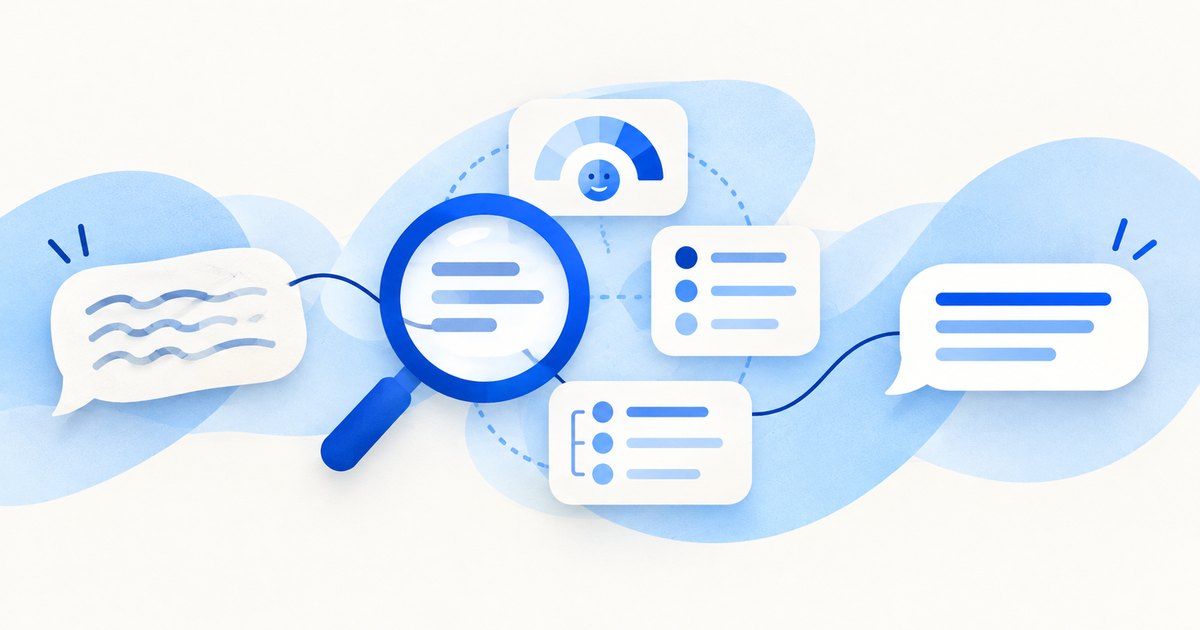
What an AI message checker can check, and how to do it yourself
An AI message checker gives you a second read on a message you already wrote. What it can tell you, the line it should not cross, and the seven-step version you can run yourself in under a minute.
Messages
Are they mad at me, or am I overthinking it?
You can usually tell a message is negative. You are much worse at telling which negative feeling it is, and much more confident than you should be. Why rereading it fifteen times doesn't help, and what the research says about reading anger into text.
Messages
Does a full stop make a text sound angry?
One experiment on 126 undergraduates started this, and it measured sincerity rather than anger. The effect is real, small, and in one 2025 study it was not significant in the longest messages tested. What punctuation actually signals in a text.
Messages
What does it mean when someone reads your message and doesn't reply?
Being ignored genuinely hurts, and the evidence for that is strong. What silence means is a near-total evidentiary vacuum, and the one reassuring statistic in circulation comes from a study you would not want to generalise from.
Messages
What should you text after an argument?
Usually not the full apology, at least not first. What the research says about repairing a fight in writing, which words work, and the one mistake that reopens the argument you are trying to close.
Writing tools
The best AI reply app depends on whether your problem is volume or stakes
Four kinds of tool answer to the same name and barely compete. Email triage, sales sequencers, support bots, and the one for messages that matter.
Writing tools
Do AI message rewriters actually work?
Four groups of tools and fourteen studies on what actually happens when AI writes your message, and what helps in the fifteen seconds before you send.
Writing tools
Grammarly is worth keeping for most people. Here's who should switch, and to what.
Prices, privacy policies, the Superhuman rebrand, and a class action most competitor lists never mention.
Writing tools
What's the best AI writing assistant for text messages?
Grammarly and ChatGPT win the document. For the message you keep rewriting, the research points somewhere else. Why Subtext is built the way it is, and what that changes.
Writing tools
AI can guess how your message sounds. It can't tell what you actually feel.
The accuracy numbers, why even trained humans disagree with each other, and the new EU law that treats text differently from your face or your voice.
Writing tools
The best AI writing assistants in 2026, sorted by the problem they actually solve
I merged deep research from three AI systems, checked the claims against primary sources, and dropped what I could not confirm. 453 professionals, 33 experiments, 2,582 writers, and a warning about AI-written apologies.
Writing tools
Every phone rewrites your messages now. Almost none of them tells you what yours says.
Apple, Google, Samsung, Grammarly, ChatGPT and Claude all rewrite messages now. What each actually does, what it costs, and the job most of them leave to you.
Writing tools
I make an AI writing assistant. Here's my honest map of the rest.
Grammarly, ChatGPT, Apple's free tools and the small messaging apps, compared by a founder who competes with some of them. Prices checked August 2026.
Writing tools
Most tone checkers never check your tone
Three AI reports on tone tools, merged and fact-checked. Most rewrite. Only a few read your tone first, and that's the difference that matters.
Messages
Why does texting give you anxiety, and what helps?
Why a two-word reply can wreck your afternoon, why most statistics about it are invented, and what actually helps. Every claim links to its source.
Messages
AuDHD and communication: what holds up, and what does not
I read the research on AuDHD and communication. Here is what holds up, what does not, and the handful of changes that actually make a difference.
Messages
Does emotional intelligence really matter at work?
Thirty years of research on emotional intelligence at work. What holds up, what quietly falls apart, and the one finding I changed my own habits over.
Messages
Is setting boundaries actually good for you?
What the research on self-silencing, assertiveness, and estrangement supports, and why the 43% figure everyone quotes has no study behind it.
Writing tools
The best apps for venting in 2026, and the uncomfortable research behind them
Most venting apps rest on a premise the research does not support. What survived a check of the claims, and what to use when the vent has a name on it.
Writing tools
What is the Subtext app, who it's for, and when to use it
Subtext reads the tone of a message before you send it, then rewrites it in your own voice. What it does, who it's for, and when to use it.
Messages
Why do people ghost? And what to send instead
Many people who ghost aren't cold. They're stuck for words. What the research says about why silence hurts more than a no, and what to send instead.
Emotions
18 TED talks about emotions that are worth the time
Eighteen talks on emotions that survived a founder's rewatch, sorted into five parts, with the view counts checked and every quote verified word for word.
Writing tools
ChatGPT alternatives for writing: what the big three do to your words
ChatGPT, Claude and Gemini are all good at making writing correct. Here is where each one quietly stops making it yours, and what people build on top.
Emotions
Why do feelings fade so fast with aphantasia?
About one person in a hundred can't picture anything. How they respond to stories and memories says a lot about where a message's feeling comes from.
Messages
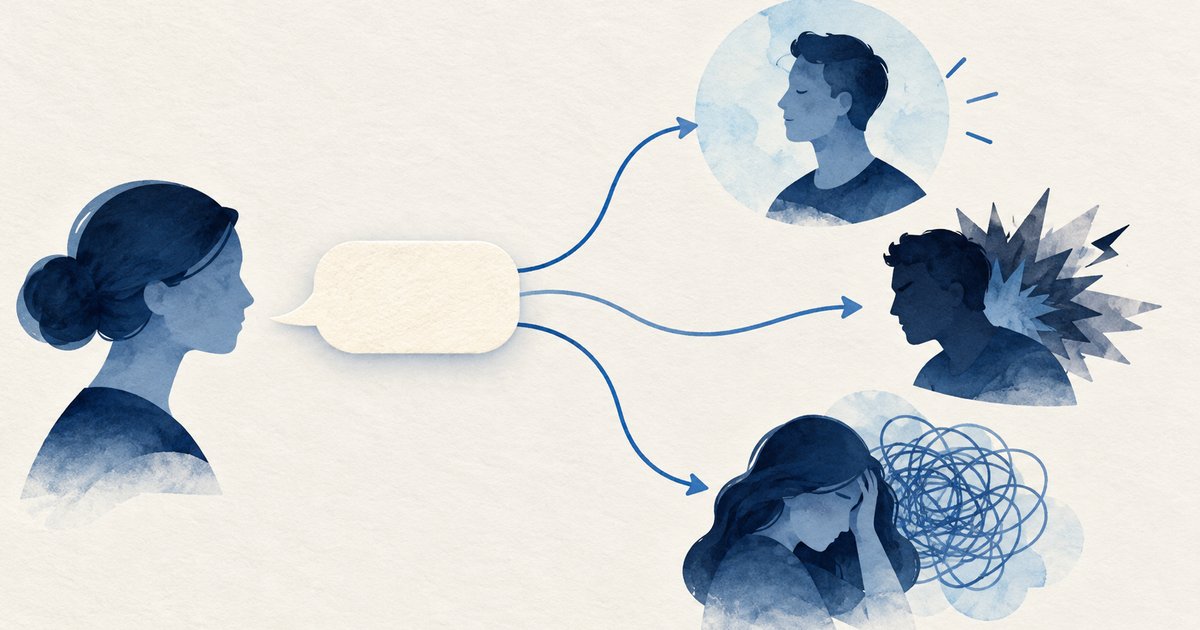
Why that text got to you
Three people can read the same message and have three different afternoons. What the research says about why, and what to do with it before you reply.
Messages
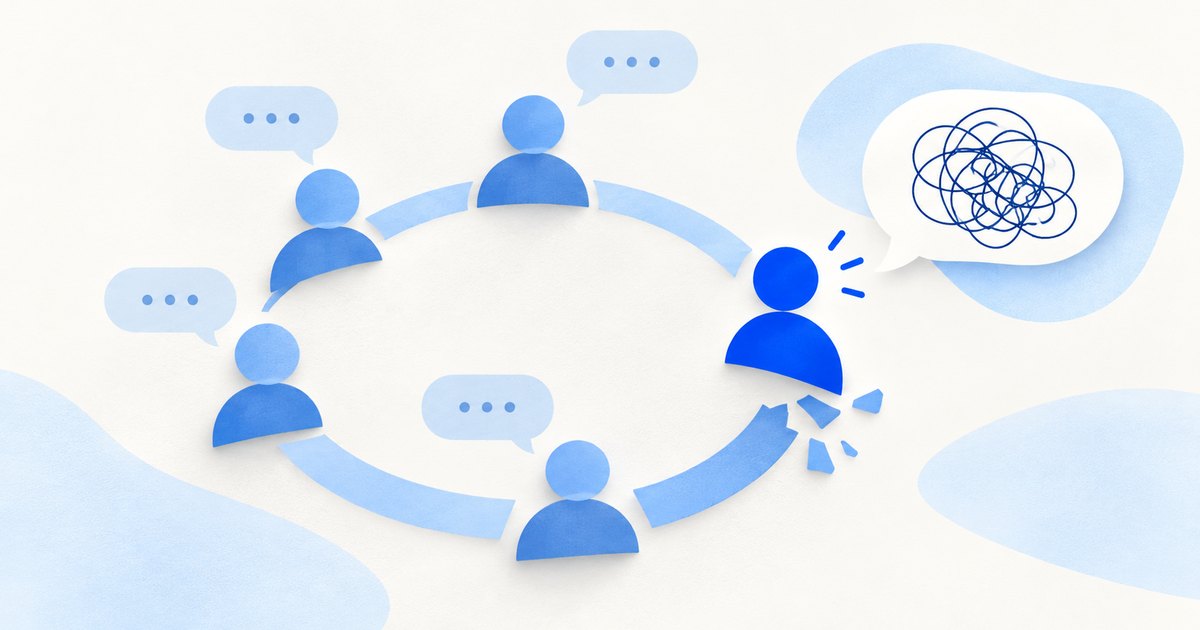
You already know the standup is broken. The hard part is saying it.
A team of eight burns 460 person hours a year on a 15-minute standup the Scrum Guide says is not a status report. The evidence, and the experiment that gets a yes.